TunerNinja: Best Free Online Tuner for Perfect Pitch
In the world of music, perfect pitch is not just a goal; it's the foundation of a great performance. But today's musicians face a confusing choice: with so many tuning tools available, which one is right for you? From traditional clip-on tuners to sophisticated smartphone apps and powerful pedalboards, the options are endless.
How do you choose the best tool without breaking the bank or sacrificing accuracy? This guide will help you decide. We'll compare the most popular tuning methods against a powerful, modern alternative: a free online tuner. By exploring the pros and cons of each, you'll see why a tool like TunerNinja is becoming the secret weapon for musicians everywhere. Get ready to achieve perfect pitch, ninja-style.
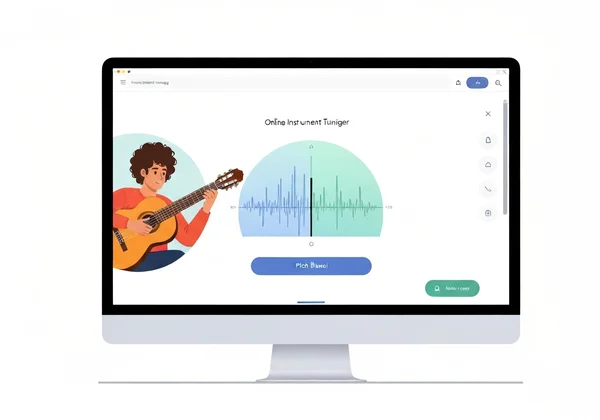
Online Tuner vs. Clip-On & Pedal Tuners: A Detailed Comparison
The first major choice for many musicians is between digital web tools and physical hardware. Clip-on and pedal tuners have been trusted companions for decades, but browser-based tuners are catching up with surprising power and precision. Let's see how they stack up.
Precision & Accuracy: Can Free Online Tuners Match Professional Hardware?
This is the most critical question for any serious musician. For a long time, the belief was that only dedicated hardware could deliver professional-grade accuracy. That is no longer the case.
Modern online tuners use advanced audio processing algorithms that run directly in your browser. A high-quality tool like TunerNinja analyzes sound waves through your device's microphone with incredible precision. This often reaches an accuracy of ±0.1 cents. A "cent" is 1/100th of a semitone, which is the smallest interval in Western music. This level of detail is on par with, and sometimes even exceeds, that of many consumer-grade clip-on and pedal tuners.
Here's the breakdown:
- Clip-On Tuners: These work by sensing the vibrations directly from your instrument's headstock. This is their biggest advantage, as it isolates the sound from background noise. However, their accuracy can vary widely between cheap models and premium ones.
- Pedal Tuners: Built for the stage, these are rugged and highly accurate. They interrupt the signal chain for silent tuning, a must-have for live performers. Their main drawback is their cost and lack of portability.
- Online Tuners: Using a microphone, they are best used in a relatively quiet environment. But for practice, teaching, or home recording, their algorithmic precision is more than enough for professionals and beginners alike.
For the vast majority of tuning situations, a well-made online instrument tuner provides all the accuracy you need.
Portability & Convenience: Tuning Anywhere, Anytime
Convenience is where online tuners truly shine. Remember when you wanted to practice but couldn't find your clip-on tuner? Maybe its battery was dead, or you left it at home, or it was buried in your gig bag under cables and accessories. It’s a frustratingly common experience.
An online tuner eliminates this problem entirely. It lives on the web, accessible from any device with a microphone and a browser—your laptop, tablet, or smartphone. There is nothing to carry, nothing to lose, and no batteries to replace. This is a game-changer for:
- Students (Leo): Just starting out and don't want to buy extra gear. You can tune your guitar right from the laptop you use for online lessons.
- Hobbyists (Maria): Want to tune your ukulele during a work break? Just open a browser tab. No need to dig through a gig bag or carry extra equipment.
- Music Teachers (Sarah): You can instantly direct all your students to a single, consistent tool that works on whatever device they bring to their lesson.
While a clip-on is small, it's still one more item to remember. An online tuner is as portable as the internet itself.
TunerNinja vs. Smartphone Apps: Which Comes Out on Top?
The next major competitor is the tuner app on your phone. They seem convenient, but they come with their own set of trade-offs. An online, browser-based tool like TunerNinja offers a streamlined and often more enjoyable experience.
Feature Set & User Experience: Beyond Basic Pitch Detection
Many free tuner apps are functional but uninspired. They show a needle and a note, and that’s about it. They are often cluttered with distracting ads or constant prompts to upgrade to a paid version. This can make a simple task feel like a chore.
TunerNinja was designed to transform tuning from a boring necessity into an engaging part of your practice. Here’s how:
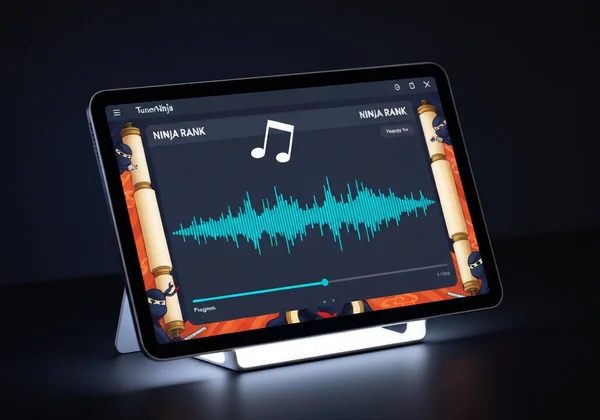
- Immersive Ninja Theme: The interface is clean, fun, and visually rewarding. Instead of a dull dial, you get sleek animations that make hitting the perfect note feel like a victory.
- Gamification: As you tune, you can advance through "Ninja Ranks," which adds a layer of motivation. It’s a small detail that makes a big difference, especially for younger learners who thrive on positive feedback.
- Comprehensive Display: You get more than just a needle. TunerNinja shows you a real-time audio waveform, the target note, the detected frequency, and the deviation in cents. It's a rich, data-driven experience wrapped in a simple design.
The goal isn't just to be accurate; it's to make the process enjoyable. When your tools are fun to use, you're more likely to practice.
Cost-Effectiveness & Accessibility: Free, No Downloads, No Compromises
This is perhaps the biggest advantage of a web-based tuner. Consider the hidden costs of a "free" app:
- Storage Space: Your phone is already full of photos, videos, and essential apps. Do you really want to dedicate precious space to a single-function tool?
- Updates: Apps require constant updates to fix bugs or add features, which uses data and time.
- Permissions & Privacy: Apps often ask for extensive permissions. Do you know what they are doing with your data?
- Hidden Costs: Many "free" apps are heavily ad-supported or lock essential features like chromatic tuning or alternate tunings behind a paywall.
TunerNinja avoids all of these issues. It is a truly free tuner with no strings attached.
- Zero Installation: Just visit the website. It works instantly.
- Always Up-to-Date: The latest version is always there when you load the page.
- Privacy-Focused: Audio processing happens locally in your browser. Your sound is never uploaded or stored.
- Completely Free: All features, including high-precision chromatic tuning for various instruments, are available to everyone at no cost.
When to Consider Dedicated Hardware: Understanding the Trade-offs
To be fair, online tuners aren't the perfect solution for every single situation. An honest comparison must acknowledge where dedicated hardware still holds an edge. Being a tuning ninja means choosing the right tool for the mission.
Specific Scenarios Where Alternatives May Excel
Think of your tuning tools like a musician's toolkit. You wouldn't use a screwdriver to hammer a nail. Similarly, there are times when a clip-on or pedal is the superior choice.

- On a Noisy Stage: This is the ultimate test for a tuner. A crowded bar or concert hall has ambient noise from other instruments, amplifiers, and the audience. This makes it difficult for a microphone-based online tuner to isolate your instrument's sound. Here, a clip-on tuner (detecting vibrations) or a pedal tuner (which cuts the audio signal) is essential for accurate, silent tuning.
- For the Professional Gigging Musician: If you play live shows regularly, a pedal tuner is a non-negotiable part of your pedalboard. It's built like a tank, offers a bright display that's visible on a dark stage, and integrates seamlessly with your effects chain.
- In an Orchestra or Ensemble: When tuning in a group, a clip-on tuner allows you to discreetly check your instrument's pitch without being affected by the sounds of the musicians around you.
For practice, songwriting, teaching, and recording at home, an online tuner is more than capable. But for the specific demands of live performance, specialized hardware remains the professional standard.
Building Your Perfect Tuning Toolkit
Musicians no longer need to wonder which tuning method is truly best - the answer depends on your specific needs. However, for the vast majority of musicians—from the absolute beginner to the seasoned professional—a high-quality online tuner has earned its place as an essential, everyday tool.
Here's what makes online tuners like TunerNinja stand out:
- Accuracy is King: Modern online tuners offer professional-grade precision (±0.1 cents), matching or beating many hardware options.
- Unmatched Convenience: Access your tuner instantly on any device without downloads, installations, or batteries.
- A Superior Experience: A thoughtfully designed interface with engaging elements makes tuning less of a chore and more of a pleasure.
- Truly Free: You get full functionality with no ads, no paywalls, and no hidden costs.
While a pedal tuner is vital for the stage and a clip-on is handy in a noisy room, an online tuner is your perfect partner for practice, lessons, and creative sessions. It’s the most accessible, cost-effective, and enjoyable way to keep your instrument sounding its best.
Ready to tune like a ninja and achieve perfect pitch every time?
Try TunerNinja now and see the difference for yourself!**
Frequently Asked Questions
Is an online tuner accurate enough for professional musicians?
Yes, absolutely. A high-quality online chromatic tuner can be extremely accurate. For example, TunerNinja offers precision up to ±0.1 cents, which is a professional standard. While a pedal tuner is better for a loud stage, an online tuner is more than accurate for practice, recording, and teaching scenarios.
What is the best free instrument tuner available online?
"Best" can be subjective, but a top contender should offer a combination of high accuracy, a clean and intuitive user interface, and zero hidden costs. TunerNinja is designed to excel in all these areas, adding a unique, engaging user experience that sets it apart. The best way to know is to test it yourself with your own instrument.
How does a microphone tuner like TunerNinja actually work?
It's a fascinating blend of physics and software. When you play a note, your instrument creates sound waves. Your device's microphone captures these waves and the software analyzes them to determine their fundamental frequency, measured in Hertz (Hz). It then compares this frequency to the standard pitch for the closest musical note (like A = 440 Hz) and displays the difference visually, telling you if you are sharp (too high) or flat (too low).