Master Alternate Guitar Tunings: Drop D to Open G Guide
Have you ever felt your guitar playing sounds the same, no matter what new chords or songs you learn? Standard tuning (E-A-D-G-B-E) is fantastic, but it's only the beginning of your guitar's sonic potential. Many of your favorite guitarists, from rock legends to folk heroes, use a secret weapon to unlock fresh sounds and creative ideas: alternate tunings.
Exploring these tunings might seem complex, but it's easier than ever with the right tools. Alternate tunings can transform your instrument, making new chord shapes possible and inspiring melodies you never thought of. This guide will walk you through popular tunings like Drop D, Open G, and DADGAD. We'll show you how a precise online tool makes this creative journey simple and accessible for everyone. With a chromatic tuner, you can start experimenting right away.
Why Guitarists Use Alternate Tunings
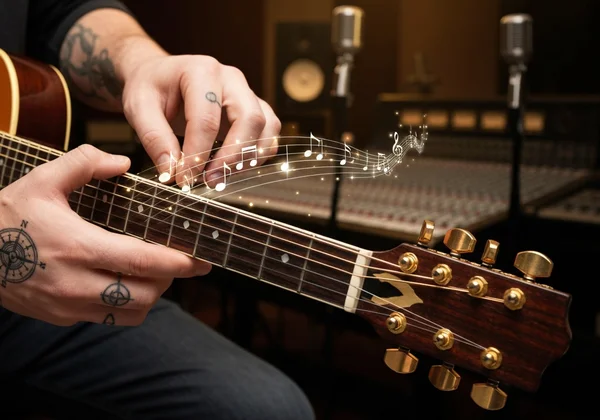
Alternate tunings aren't just for advanced players; they are a creative tool for all guitarists. Changing the pitch of just one or two strings can completely alter the instrument's voice. It opens up a new world of harmonic possibilities and can even make certain songs easier to play. This is why so many iconic tracks have a unique sound that’s hard to replicate in standard tuning.
Unlocking New Sonic Landscapes
The primary reason guitarists explore alternate tunings is to find new sounds. By retuning your strings, you change the relationships between the notes, creating different moods and textures. For example, some tunings produce a deep, heavy drone perfect for rock music, while others create bright, ringing open chords ideal for folk and acoustic styles.
This technique is behind the signature sounds of countless famous songs. Think of the powerful, heavy riffs in songs by Pearl Jam or the ethereal, Celtic-inspired melodies of Led Zeppelin. These artists used alternate tunings to step outside the box and create something truly memorable. The emotional impact is significant; a simple tuning change can make your guitar sound haunting, joyful, or aggressive.
Simplified Chord Shapes and New Voicings
One of the most practical benefits of alternate tunings is how they simplify chord shapes. Certain tunings are designed so that you can play a full, rich-sounding chord by barring just one or two fingers across the fretboard. This is especially useful for creating drone effects, where one or more open strings ring out while you play a melody on other strings.
For example, in Open G tuning, strumming all the open strings produces a G major chord. This allows for incredibly fluid slide guitar playing and one-finger chord shapes that are impossible in standard tuning. You can create complex and beautiful chord voicings with minimal effort, freeing you up to focus on rhythm and melody. It’s a fantastic way to break out of a creative rut and discover new ways to express yourself on the guitar.
Getting Started: Essential Tools and Safety Tips
Before you start detuning your strings, it's important to have the right tool and know how to do it safely. A reliable tuner is non-negotiable, and understanding how string tension works will protect your guitar and your strings. With the right preparation, you can confidently explore any tuning you desire.
Why TunerNinja is Perfect for Alternate Tuning
For alternate tunings, a standard tuner that only recognizes the six notes of standard tuning won't work. You need a chromatic tuner, which can detect and display all 12 notes of the musical scale. This is where TunerNinja shines as the perfect partner for your creative explorations.
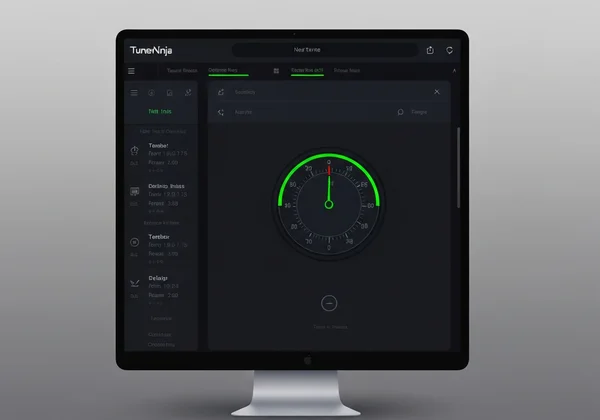
TunerNinja is a free, web-based chromatic tuner that works directly in your browser. Here’s why it’s ideal for this task:
-
Precision: Its advanced algorithm is accurate to ±0.1 cents, ensuring you hit each note perfectly. This is crucial for alternate tunings to sound right.
-
Clear Visuals: The intuitive ninja-themed dashboard provides instant feedback, showing you if your note is sharp or flat. This makes it easy to adjust your strings with confidence.
-
Accessibility: Since it’s a web tool, there’s nothing to download or install. You can use it on your laptop, tablet, or phone, making it easy to tune your guitar anywhere.
-
Free to Use: Experimentation should be free. TunerNinja removes the cost barrier, so you can explore dozens of tunings without spending a dime.
String Safety: Avoiding Breakage When Tuning Down
A common fear when trying new tunings is breaking a string. While tuning up significantly can increase tension and risk breakage, most alternate tunings involve tuning down. This decreases tension, which is generally safer for your strings and guitar neck. However, you should still follow a few simple steps to do it safely.
When you tune a string down, do it slowly. Pluck the string continuously as you turn the tuning peg to hear the pitch change and see the feedback on your tuner. This prevents you from overshooting the target note. If a string becomes too loose or "flappy," it might not produce a clear tone. Some guitarists use slightly heavier gauge strings if they primarily play in lower tunings to maintain proper tension. Don’t worry too much as a beginner; standard strings will work fine for the tunings in this guide.
Drop D Tuning: The Gateway to Alternate Tunings
If you’re new to alternate tunings, Drop D is the perfect place to start. It’s one of the most popular and easiest to achieve. It requires changing only one string, but the sonic impact is huge. It has become a staple in rock, metal, and acoustic music for its powerful sound.
What Makes Drop D Special
Drop D tuning is created by lowering your thickest string (the 6th string) from an E down a whole step to a D. The rest of the strings remain in standard tuning. The full tuning becomes D-A-D-G-B-E.
This simple change creates two wonderful effects. First, it extends your guitar's range with a powerful, low D note. Second, it forms a "power chord" (a root and a fifth) with the two lowest strings. This means you can play fast, heavy power chords on the bottom three strings using just one finger, a technique used extensively in rock and metal music. It gives riffs a thick, resonant, and heavy feel that’s incredibly satisfying to play.
Step-by-Step Drop D Tuning with TunerNinja
Ready to try it? It takes less than a minute.
- Open the Tuner: Go to the TunerNinja homepage and allow microphone access.
- Pluck Your 6th String: Pluck your low E string (the thickest one). The tuner will show "E".
- Tune Down Slowly: While continuing to pluck the string, slowly turn the tuning peg for that string to loosen it. Watch the tuner's needle move from E, past Eb, and toward D.
- Lock in the D: Keep adjusting until the tuner’s needle is perfectly centered on the note "D" and the indicator turns green.
- Check Your Work: Play the open 4th string (which is also a D) and the newly tuned 6th string together. They should sound harmonious, an octave apart.
That's it! You are now in Drop D tuning. Try playing a one-finger power chord across the three lowest strings.
Open G Tuning: The Secret of Slide Masters
Once you're comfortable with Drop D, it's time to try a classic open tuning. Open G is famous for its use in blues and rock 'n' roll, particularly by slide guitarists like Keith Richards of The Rolling Stones. It creates a full, bright sound that’s perfect for both rhythm and lead playing.
The Rich Sound of Open G
Open G tuning means that when you strum all the open strings, you hear a G major chord. This makes it incredibly intuitive for playing in the key of G. The most common Open G tuning is D-G-D-G-B-D. To get there from standard tuning, you'll need to change three strings:
- 6th string (E) tunes down to D.
- 5th string (A) tunes down to G.
- 1st string (E) tunes down to D.
The result is a wonderfully resonant and jangly sound. It’s the secret behind classic songs like "Honky Tonk Women" and "Brown Sugar." Because the open strings form a chord, you can use a slide or a single finger to play full chords all over the neck.
Tuning to Open G with TunerNinja
Tuning to Open G involves more changes, but with a precise tuner, it's straightforward.
- Start with the 6th String: Using TunerNinja, tune your low E string down to a D, just like you did for Drop D.
- Tune the 5th String: Pluck your A string and tune it down a whole step to a G.
- Leave the Middle Strings: The 4th (D), 3rd (G), and 2nd (B) strings stay the same.
- Tune the 1st String: Pluck your high E string and tune it down a whole step to a D.
- Verify the Tuning: Strum all six open strings. You should hear a beautiful, bright G major chord. If you need to fine-tune, the online instrument tuner will guide you for each string.
Now, try barring your index finger across all six strings at the fifth fret. You've just played a C major chord!
Beyond the Basics: DADGAD and Custom Tunings
Once you've mastered Drop D and Open G, a whole universe of tunings awaits. DADGAD is one of the most beloved and versatile, while creating your own custom tunings is the ultimate form of creative expression.
The Mystical World of DADGAD
Pronounced "dad-gad," this tuning is a favorite in Celtic, folk, and acoustic fingerstyle music. It has a suspended, ambiguous quality that is neither major nor minor, giving it a mystical and open-ended feel. Popularized by artists like Jimmy Page in "Kashmir," it's incredibly versatile for both atmospheric chords and intricate melodies.
To get to DADGAD from standard tuning:
- 6th string (E) tunes down to D.
- 2nd string (B) tunes down to A.
- 1st string (E) tunes down to D.
The result is D-A-D-G-A-D. The repeating D and A notes create beautiful drones and ringing harmonies that are perfect for solo guitar pieces.
Creating Your Own Custom Tunings
Why stop with established tunings? The final frontier is creating your own. This is where a tool like TunerNinja becomes an indispensable creative partner. You can experiment by changing one string at a time and hearing what happens. Maybe you lower your G string to F# to create a D major tuning. Or perhaps you invent something completely new.
There are no rules here. Use your ear and your creativity. A reliable online chromatic tuner allows you to document your discoveries and easily return to them later. This is how you can develop a truly unique voice on the guitar.
FAQ Section
How long does it take to get used to playing in alternate tunings?
It varies for each player and tuning. Drop D feels familiar very quickly since only one string changes. More complex tunings like Open G or DADGAD might take a few practice sessions to get used to the new chord shapes. The key is to have fun and not worry about memorizing everything at once.
Will alternate tunings damage my guitar?
No, especially when you are tuning strings down, which reduces tension on the neck. Most alternate tunings are perfectly safe for any standard acoustic or electric guitar. The only risk occurs when you tune a string much higher than its standard pitch. This increases tension and could potentially cause a string to break. Stick to the tunings in this guide, and you'll be fine.
Can I use TunerNinja for alternate tunings on electric and acoustic guitars?
Absolutely! TunerNinja works by using your device's microphone to listen to the pitch. It works equally well for acoustic guitars, electric guitars (played without an amp or quietly through one), basses, ukuleles, and any other stringed instrument. Just make sure you are in a relatively quiet room for the best results. You can easily try our free tool with any instrument you have.
What's the difference between a chromatic tuner and a standard guitar tuner for alternate tunings?
A standard guitar tuner is programmed to recognize only the six specific notes of standard tuning (E, A, D, G, B, E). A chromatic tuner, on the other hand, can detect all 12 notes in the Western musical scale (A, A#, B, C, C#, etc.). For alternate tunings, a chromatic tuner is essential because you are tuning your strings to notes outside of the standard EADGBe pattern.